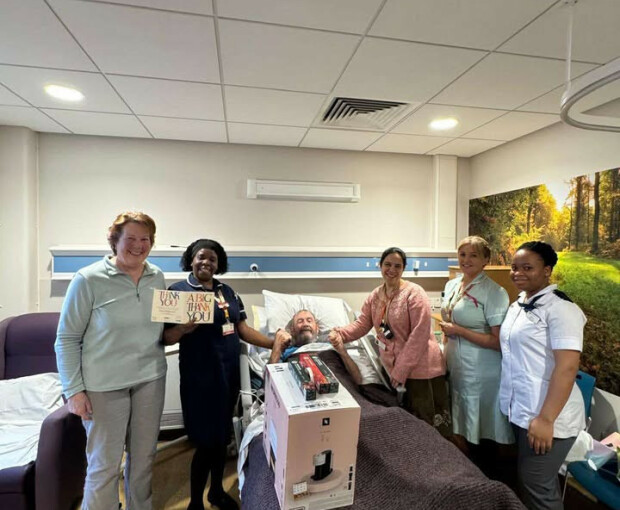
In late November, four additional beds were opened on LOROS Hospice’s inpatient ward thanks to short-term winter pressures funding. Due to end in March, this funding has already enabled 17 patients to receive the specialist palliative care they urgently needed.
The additional beds are just one of the ways LOROS is helping to ease pressure on the NHS during an exceptionally challenging period for health services.
Richard Holden was among the first patients to benefit.
Linda Holden, Richard’s wife, said: "Richard was in excruciating pain when he was transferred to LOROS. The palliative consultant at the hospital suggested LOROS... Had Richard not secured a bed we really don’t know what could have been done with the severe pain and he would have continued a very quick decline in his health. As it was the pain was so bad he just wanted to die.
“One day in LOROS started his journey back, the doctors checking very closely his reaction to the medication and staff reporting quickly with pain levels. He is now comfortable and thanks to LOROS, back at home.”
Camilla Barrow LOROS CEO said: “Hospices can provide expert symptom control, specialist nursing care and emotional support for families, helping people to have a good death. However, the additional funding for these beds ends in March. If the beds close, our NHS partners will have to care for the patients often in environments that can be challenging to deliver high quality care. We cannot allow that to happen.”
Like Richard, many patients wish to remain at home as they approach the end of life but need specialist support to prevent emergency hospital admissions when symptoms such as pain become difficult to manage.
LOROS community nurse team visit patients in their homes and offer specialist palliative care and advice to patients and families. Working closely with other health services LOROS community nurses and consultants help keep patients out of hospital reducing the need for hospital unless absolutely necessary. Supporting a patient to be cared for and die at home often helps minimise distress for both the patient and their family.
Megan Stanley, LOROS CNS nurse, said: “I recently cared for a patient with end stage cancer who was determined to stay at home, despite her worsening condition. We arranged urgent outpatient clinic appointments with our consultant. I visited her regularly and helped with clinical and psychological support and her family could ring an out of hours advice line for help too.
“She really benefitted from the continuity of care. When she died peacefully at the hospice, her family said ‘I don’t know what we would have done without your team’. Had we not been able to provide that support, they would have been calling ambulances and she would have been in and out of A&E, which would have compounded her distress. Instead she had the death she chose.”
Despite its vital role as provider of specialist palliative care, relieving pressure on local NHS services, LOROS currently receives just 27% of its support from government. Like many hospices, financial pressures forced LOROS to reduce its patient services over the past year.
Camilla Barrow adds: “Temporary measures like winter pressures funding help us and our NHS partners manage immediate demand, but they do not address the underlying funding issues. Sustainable investment is essential to ensure no one has to wait for the specialist, compassionate hospice care they deserve. People on hospice waiting lists do not have time to wait.”